
Best Reads of 2025
A long, long time ago—maybe as long as 50 years ago—I began to suspect that my life was going to revolve around books.
Turns out I was right. For more than 30 years I worked with books. And to this day I continue to buy books, read books, write books, think about books, and write about books. Sometimes I write about people who write books.
When I opened my Goodreads account (in April 2012), it was because I felt a need to keep track of my reading. I maintain the account because I find it helpful to have easy access to a list of books I’ve read where I can leave comments on the book itself: how well I thought it worked—as entertainment, as literature, etc.—for my own use and for anyone who might be curious. A lot of books sink without a trace, so I take advantage of this popular online venue to comment on obscure or offbeat titles that I’ve enjoyed and which (in my opinion) deserve a wide readership. I also like placing an occasional spotlight on older titles—lost in the mists of time through no fault of their own or the author—that continue to reward the intrepid reader willing to go the extra mile and seek them out.
Fast forward to 2026. I’ve posted more than 700 reviews on my Goodreads site. Sometimes people look at these reviews and occasionally “like” them. Some even comment on them. It’s gratifying because this kind of interaction is what social media is all about.
Below (in no particular order) is a selection of notable titles I enjoyed in 2025, along with my reviews. Most are very recent publications. A couple are a few years old. One is much older. Comments, as always, are welcome.
Ⴔ
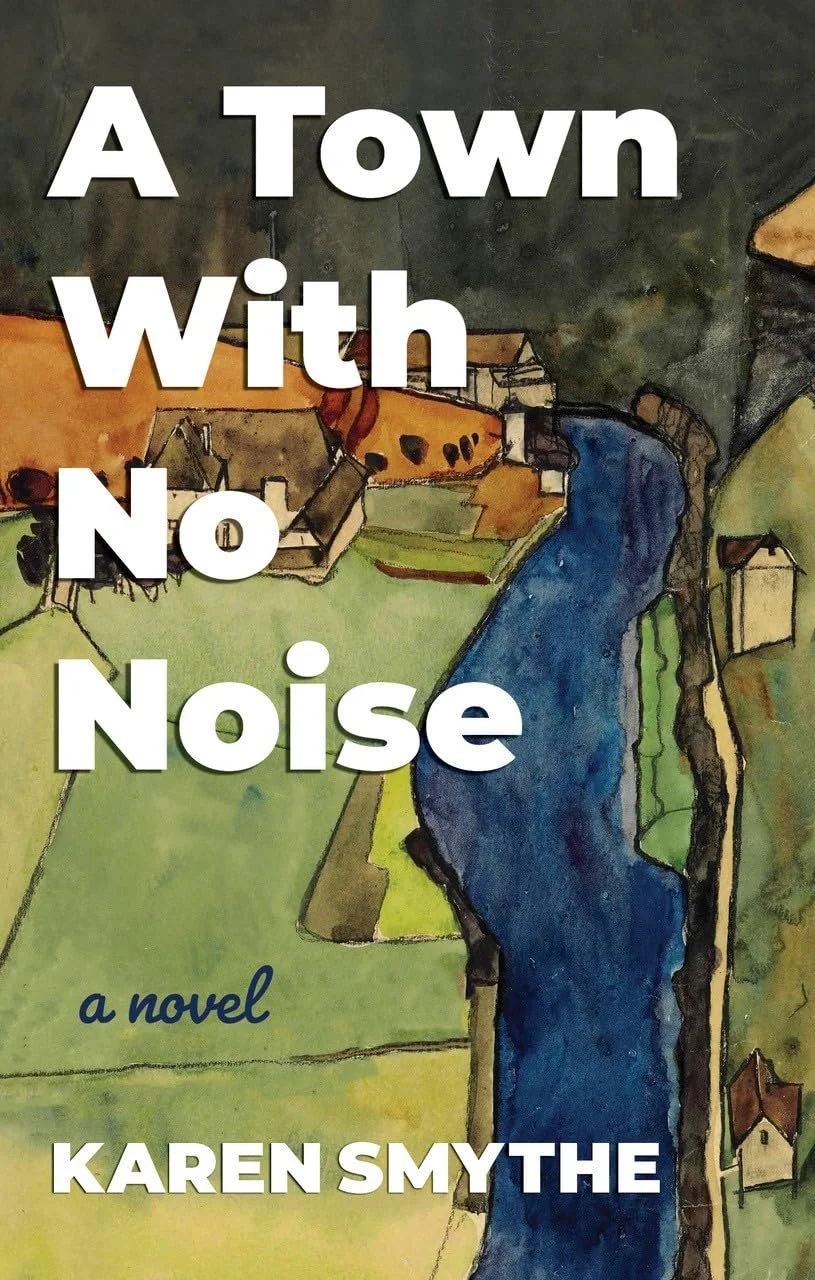
Truth is an elusive and hard-won commodity in Karen Smythe’s spellbinding novel, A Town With No Noise. Through her sharply observant narrator, Samara Johansen, Smythe tells a multi-faceted tale filled with shattering revelations and family secrets that leave Samara wondering who she is and how she should live her life. A Town With No Noise is, admittedly, difficult to summarize. There are multiple characters, story threads, and structural devices that combine to create a complex network of interconnections and timelines. The book begins with Samara and her boyfriend J. driving to Upton Bay, a well-known theatre hot-spot located in the heart of Ontario wine country that during the spring and summer fills up with tourists. The visit has a dual purpose: to see J.’s grandfather and for Samara to gather information on the town for an article she’s writing aimed at promoting tourism. On its surface, Upton Bay has the appearance of a small-town idyll, with its clean streets, lavishly curated storefronts, and lovingly preserved domestic properties featuring wrap-around porches and manicured lawns. Smythe inserts third-person vignettes about the residents that broaden the perspective for the reader and reveal the character of the town in the accrual of details about people and their pasts. Sam—as an outsider looking in—uncovers a seamy underbelly of exploitation when she visits the brilliantly named Evil Maple Estates winery. The longer Sam stays in Upton Bay, the more questions she has about the town’s character, and about her relationship with J. and his family background. This personal storyline is one horizontal movement of this novel, and its sociological revelations are another; the third is a vertical deep dive into history, as Sam moves into a role as an investigative writer and researcher into J.’s German family history during WW2 and her own, Norwegian family history in Occupied Norway. Because of her unusual first name, Samara repeatedly faces questions about her own ethnicity (she’s named for her grandmother’s best friend, a Russian Jew). Samara’s grandmother lived under Nazi occupation in a small town in Norway—another town with no noise—and in the second part of the novel, Sam’s mother hands her a box of documents about that life, which will reveal devastating family secrets. Now Sam becomes an archaeologist of the past, both personal and historical, which rises up and effectively changes the direction of her own life. A Town With No Noise is compelling from start to finish. It’s a remarkable novel about ugly truths obscured by the passage of time and the stories we tell to make life palatable, for ourselves and our loved ones. It’s also a novel that effectively blends fact with fiction, the author making clever use of the historical record, using embedded documents and footnotes to elucidate or expand upon factual elements of the story. Smythe includes a list of resources at the end of her book that indicates the extent of the research behind her novel, as well as a list of questions for book clubs to make use of. There is so much to discuss in A Town with No Noise that individual readers and book clubs alike are sure to find it a fascinating, moving, and unique novel that will change the way they look at history, too.
Ⴔ
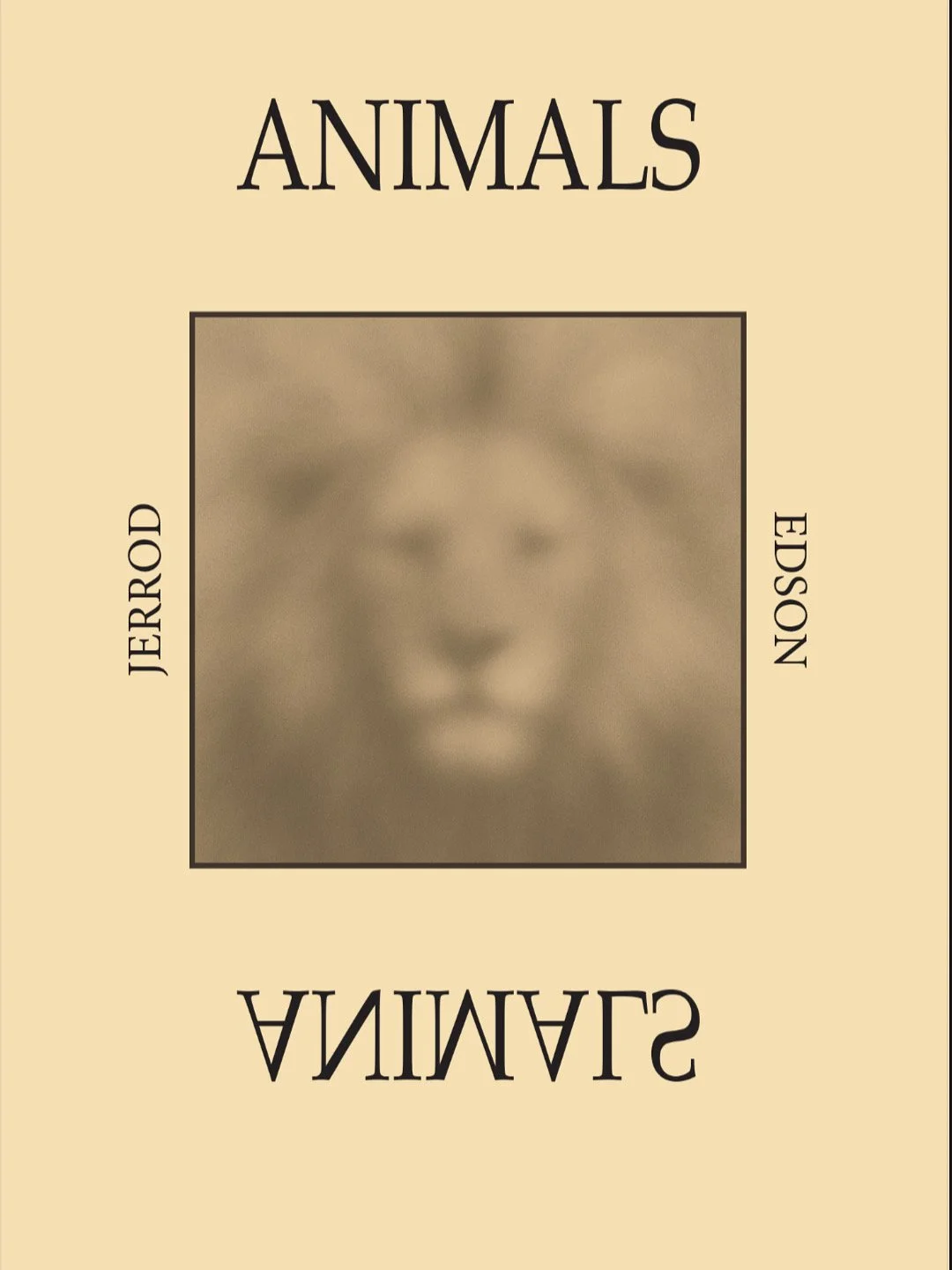
True originality is rare. In Animals, a taut and occasionally gruesome novella-length narrative, Jerrod Edson has written an allegory that explores territory in the fictional landscape that (in this reader’s experience) remains largely uncharted. The problem with reviewing a book of such stunning uniqueness is that a significant portion of the pleasure of reading it derives from the gradually dawning realization of exactly what it is you’re reading. Thus, a brief description will have to suffice. Edson divides the narrative into three streams, in each of which the human characters face quickly developing life-threatening situations. The story’s shocking impact comes from its persuasive depiction of a type of casual brutality that, undisputedly and perhaps inevitably, over hundreds of years and in various forms, helped build and sustain human civilization. This brutality occurs universally across our world every single day, and it’s probably fair to say that many people, if they think about it at all, would likely dismiss it as a cost (just one of many) of maintaining society in its present form. But in Animals, Jerrod Edson forces the reader to consider and experience this brutality from a different perspective and maybe even to question beliefs and opinions long ingrained in the human psyche. This is a book for the adventurous and inquisitive adult reader of literary fiction, and one that students of contemporary fiction must read. Its power is undeniable and its message unforgettable.
Ⴔ
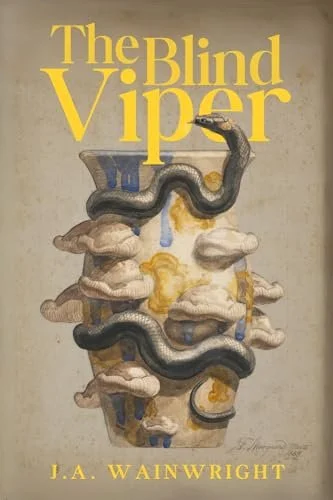
In The Blind Viper, his 8th novel, JA Wainwright has written a gripping account centred around ways of seeing, the creative impulse and the power of the mind to overcome seemingly insurmountable obstacles.
In the spring of 1971, Alex, a young Canadian poet and scholar, visits a Greek island in search of solitude and a creative spark. Soon after his arrival he finds himself in the company of a famous British painter, Leo Dalca, and Leo’s much younger companion, a Swedish model named Sofia. Leo is blind and yet can create stunning works of art that fetch enormous prices and hang in galleries around the world. For Alex, Leo and Sofia become more than just a distraction, not least because of Sofia’s beauty, intelligence and sphinx-like Nordic poise, and Leo’s traumatic life story. As a young man, artistically talented but unschooled, Leo was swept up in the anti-fascist movement of the 1930s. He and a friend, Irish poet Charlie Donoghue, along with hundreds of others, traveled to Spain to fight in the Civil War, where Charlie was killed and Leo blinded by shrapnel. Leo, still a young man, his life tragically altered, returned home and after struggling to find his footing, was working toward an unlikely and challenging career path, one that would allow him, though sightless, to use his sense of touch to provide his mind’s eye with a visual impression of the art he wanted to create. Through stubbornness, luck and hard work, Leo was able to develop his talent and propel himself to the pinnacle of the art world, where both he and his paintings were in high demand. By the 1960s Leo Dalca’s stature was such that he could approach Sofia, a successful model, and ask her to pose for him, nude. The action returns to 1971, Leo and Sofia are companions and lovers, though her role extends to guide and caregiver. But the presence of the young Canadian in their midst adds a complicating and intriguing wrinkle to their relationship when it becomes clear that Alex’s attraction to Sofia is reciprocated. But The Blind Viper tells more than just a tale of sexual transgression. This is a complex story, global in scope, rich with historical detail and mythic implication. The novel is written from several perspectives and depicts various stages in the lives of the main characters. The events of 1971 seed the core action. Stung by disappointment, Sofia leaves Leo. Alex returns to Canada alone to pursue his academic career. Years pass. Sofia and Leo maintain an irregular correspondence, until Leo, nearing ninety, wishing to make amends for acts of betrayal and manipulation, reaches out to Sofia urging her to visit before he dies. Back in Canada, upon learning of Leo’s death, Alex tracks down Sofia with the intention of digging into Leo’s life and writing his biography. Readers of his previous books know that JA Wainwright is not just a disciplined creator of fictional worlds, but also an empathetic poet and inquisitive writer of non-fiction. Throughout The Blind Viper, the writing is lush and full-blooded, filled with lyrical flourishes, insightful observations on human nature and stunning visuals, and yet does not distract from a brilliantly paced and often suspenseful story. The action scenes set on the Spanish battlefield are particularly effective, as Leo and Charlie stare death in the face, both absorbed by their own memories and regrets. The Blind Viper is about creativity, but it is also about life, love, compromise and the hazards of self-absorption. It is a dazzling performance by one of our very best writers.
Ⴔ
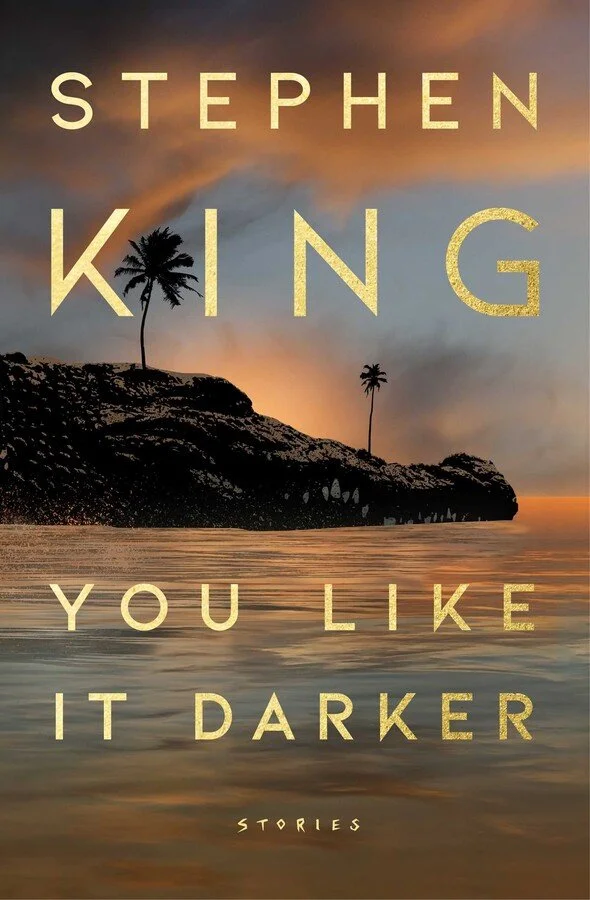
You Like It Darker presents the work of one of the most versatile imaginations in the literary world in peak form. Stephen King enjoys an iconic reputation as a novelist, but his shorter works are less well-known. This is a shame because the stories collected in You Like It Darker include all of the tension, mystery and eeriness for which King is famous, are every bit as entertaining, and deliver the goods in condensed form. Alien incursions, murderous psychopathy, hallucinations, an infestation of snakes, mischievous spirits, dreams spilling over into reality, pseudo-science gone horribly wrong … it’s all here. The collection opens with “Two Talented Bastids,” in which the son of bestselling author, Laird Carmody, learns the unearthly truth behind his father’s sudden success in middle age. “The Fifth Step” tells the story of widower Harold Jamieson, who one day while resting on a park bench, meets Jack, a recovering alcoholic working his way through the 12 steps. Harold patiently agrees to listen to Jack’s confession of wrongdoings, but at the story’s end gets more than he bargained for. In “On Slide Inn Road,” written as homage to Flannery O’Connor, a family confronts a pair of ruthless criminals on a remote and little-used rural byway they were driving along as a short cut until their car became stuck in a ditch. “The Dreamers” recounts Vietnam veteran William Davis’s harrowing experience as an assistant for Elgin—self-described “gentleman scientist”—during Elgin’s short-lived and ill-advised attempts to discover the meaning of human existence by penetrating the “wall of sleep.” In “The Answer Man,” it’s 1937, and young Phil Parker, pondering a life-defining dilemma, encounters a man at a roadside booth calling himself The Answer Man. Phil stops and pays the advertised fee to have his questions answered. But even though he’s picked up insight into his future through this inexplicable channel, he finds as he ages that he has no more control over the trajectory of his life than anyone else. And in the novella-length story “Danny Coughlin’s Bad Dream,” the collection’s standout, Danny, who narrates, finds himself the target of a police investigation after discovering the body of a murder victim through means that even he finds hard to believe. Though some of the stories here work better than others, readers will find that Stephen King’s extraordinary gifts are on display on every page. King knows instinctively how to grab the reader’s attention and instantly pull him into the story. From the first few lines, the reader is transfixed by a compelling narrative voice or forced to read on because of a quickly sketched but engaging situational drama, or has their curiosity aroused by an accumulation of fascinating detail. He knows the tricks of the trade inside-out and deploys them with artistry that to the reader comes across as effortless, but any writer of fiction will tell you it’s anything but. Do yourself a favour and read this brilliantly entertaining collection of short fiction by an acknowledged master. And as a bonus for aspiring writers, You Like It Darker also serves as a master class in the art of writing fiction.
Ⴔ
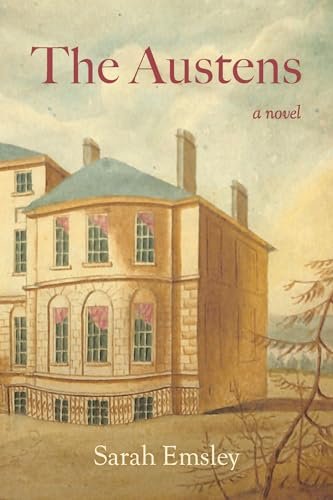
In The Austens, her debut novel, Sarah Emsley imagines Jane Austen’s life and times during a period (1802-1814) of great personal upheaval, but also one of significant creative accomplishment. Though The Austens delves deeply into many of Jane’s literary, social and domestic activities from this period, much of Emsley’s engrossing narrative is concerned with the relationship of Jane with sister-in-law Frances Palmer (Fanny), who in 1807 married Jane’s brother Charles. Jane (1775-1817) was born second to last of eight siblings, Charles being the youngest. Charles, an officer in the Royal Navy during the Napoleonic Wars, followed a rising career path to postings around the world (including Halifax, Nova Scotia), taking his growing family with him, and thus Jane and Fanny’s relationship is chronicled largely through their correspondence, though they did meet on several occasions. Since she had no money of her own, the circumstances of Jane’s life placed her in a precarious position—one she shared with many single women of the time, including her sister Cassandra—of being almost complete dependent on the generosity of her family. It was a situation she was painfully aware of through years of frustration as she struggled to get her novels published and prove her worth. Jane also encountered the same conundrum many of her heroines faced: whether to marry a man she did not love in order to relieve her family of this burden. As the story opens, Jane, at age 27, having years earlier completed a novel manuscript publishers had rejected (an early version of Pride & Prejudice), is considering the merits of working as a governess to make money, and being dissuaded from this notion by her sister. Soon afterward she is approached by a man of some means whom she does not find attractive (she bluntly describes him as “dull”) who asks for her hand in marriage, ultimately turning him down, and with this decision committing herself fully to her writing. By contrast, Fanny marries George, committing herself fully to her husband and motherhood. When they begin exchanging letters, Fanny shows keen interest in and appreciation for Jane’s literary efforts, and as time passes, even though they do not always see eye to eye, the two become close. The story of Jane and Fanny’s friendship, their fears and joys, triumphs and tribulations, is based on a spotty historical record that Emsley leavens with appropriate creative touches to fill in the blanks and add dramatic urgency. Crucial to the novel’s success is the character of Jane, who speaks in a voice of her time, and who combines empathy, emotional warmth, sparkling wit, and uncompromising intelligence into a captivating mix that only the most curmudgeonly reader would not find compelling. Sarah Emsley’s The Austens is a remarkable work of historical reconstruction as well as a suspenseful, informative and often very moving entertainment, one that you don’t have to be a Jane Austen enthusiast to enjoy.
Ⴔ
The assertion that Steven Heighton is one of the very best writers this country has ever produced will not meet with much resistance. His intrepid nature and astonishing versatility, not to mention his dedication to craft, made him proficient at any form of written expression to which he set his mind. He was an effective and entertaining public speaker, a generous and self-effacing teacher. He was sensitive to the power of words and vigilant in his defense of the creative act. While many writers simply write to the best of their ability and never examine, question, or even discuss their gift, Heighton was curious, opinionated and forcefully articulate about what makes good writing good and bad writing bad. He was also a capable editor. And though to be edited by Steven Heighton was a dream come true, you were surely dreaming if you thought it was going to be easy. His death on April 19, 2022, at the age of 60, was everyone’s loss. Now, three years later, Biblioasis has published Sacred Rage, a timely collection of Heighton’s short fiction, selected and introduced by his longtime editor John Metcalf, and taken from the four volumes published during his lifetime. The collection opens with three Japan stories from Flight Paths of the Emperor (1992), a volume that fictionalizes Heighton’s experiences teaching English in that country. The reader immediately notices the exuberance of the prose, which drives each story’s relentless forward motion. These are fictions—observant, compassionate, probing, yet lightly humorous—about cultures, not so much clashing as failing to mesh. The young Canadian narrator, striving to learn anything and everything about this enigmatic country where he’s chosen to build a temporary life, time and again emerges into the light, blinking and scratching his head, none the wiser. A world traveler himself, Steven Heighten could and often did set his fiction in far-flung locales (a wonderful example is his novel Every Lost Country, set the remote, mountainous terrain where Nepal borders Tibet), but much of his later short fiction is set in his native Ontario, in and around the Kingston area. In these stories we often encounter people of limited means and modest prospects struggling to find a path forward. “Townsmen of a Stiller Town” comes to mind as a prime example of Heighton chronicling the exploits of a hapless protagonist to great comic effect but also reaching inward, to share with us the essence of what good fiction does best: entertain us while making us ponder what it means to be human and vulnerable. In this story, Tris Leduc has graduated from high school but, lacking both ambition and resources, finds himself delivering orders for his aunt’s “Pickin’ Chickin’” franchise while dressed in a chicken costume. The absurd outfit makes him a target of scornful amusement for some of the local louts, and Tris’s main objective throughout the story is to find reasons to not wear the costume—to, as it were, break free and become his own man—especially after a perplexing and troubling encounter while making a delivery to the local morgue. Though Heighton’s narratives are principally mainstream in structure, he occasionally stretched himself stylistically. One such experiment is “Noughts & Crosses: An Unsent Reply,” an amusing dive into the mind of Nella, who’s received an email from her lover breaking off their relationship. Through the course of her lengthy “unsent reply,” Nella analyses her former lover’s message phrase by phrase, line by line, parsing out hidden meanings and facile justifications in her search for a truth that will assuage her broken heart and wounded pride. In this collection of standout works, two stories deserve special mention. “Shared Room on Union” takes place on a city street. It’s past midnight and Justin and Janna, together in Justin’s Volvo, are ending their date with a moment of intimacy when a man taps on the driver’s side window. He has a gun and is intent on jacking the car. The incident proceeds, intense and fraught as one would expect, but not without several twists that display Heighton’s flare for uncovering human comedy in unexpected places. And in “The Dead Are More Visible,” middle-aged Ellen, who during the winter works nights flooding and maintaining the city park’s skating rinks, finds herself the focus of threatening behaviour from three drunken youths. Lashing out to protect herself, she causes one of the men a gruesome injury and instantly becomes the young man’s saviour as his two friends abandon him. Both stories find concise, sometimes funny, sometimes bitter, dramatic ironies in the human condition and universalize the conundrums facing their characters, to whom we are drawn in sympathy like a thirsty horse to water. In his introduction, John Metcalf says, "Steve fought through to the ability to make writing that overwhelms us, enraptures us, that makes us see again our world as we saw it once in childhood, the world that, in [John] Cheever’s words, lies spread out around us like a bewildering and stupendous dream." Steven Heighton sought to recreate that dream with every word he committed to paper. He was a writer of surpassing integrity, unabashedly self-critical, who never stopped setting lofty goals for himself. He was an enemy of mediocrity who could be offended by a misplaced modifier. For him, writing was nothing short of a matter of life and death. He was always striving to make his own work better and wanted the same from others. And yet he knew and freely acknowledged that perfection is impossible (In Work Book, his collection of aphorisms and advice for writers, he wrote: “Cast a spell and the small flaws don’t matter.”). In his lifetime he achieved more success than most of his colleagues but was familiar with the ritual humiliations that accompany the writing profession. He was an exceptional mentor and friend. Sacred Rage is a fitting tribute to Steven Heighton’s legacy. The stories collected here demonstrate his remarkable range and achieve a standard that writers everywhere should aim for.
Ⴔ
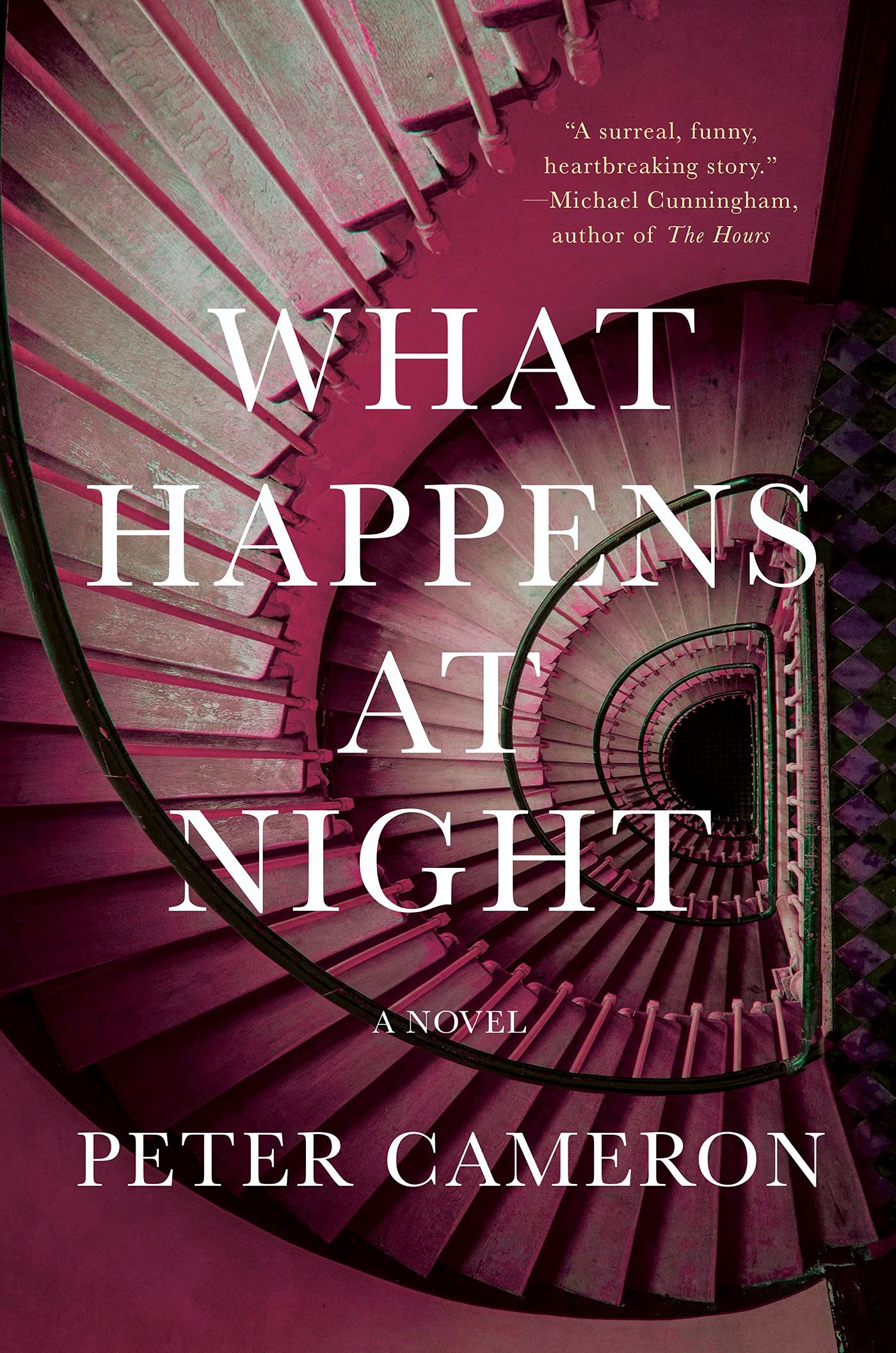
Peter Cameron’s hauntingly enigmatic novel, What Happens at Night, chronicles the adventures of an unnamed couple from New York who have ventured to a frozen outpost in the northern reaches of an unnamed European country to adopt a baby. The couple is childless—in the past the woman has suffered through several failed pregnancies. She now has cancer, and the couple’s search for a baby has pushed them to this foreign extremity because everywhere else they have looked, her diagnosis—indeed, she is gravely ill—has disqualified them as potential adoptive parents. After a lengthy journey, the final leg of which is completed by train, they emerge into the nocturnal wilderness surrounding an apparently abandoned train station but manage to secure a taxi to take them to the Borgarfjaroasysla Grand Imperial Hotel. Cameron establishes the setting of his story hazily, but with many intriguing particulars. It is a world that is at once eerily familiar and yet profoundly alien, with a bleak, snow-blanketed landscape and an indefinite timeline that leaves us with the impression that the train has carried the couple not just miles northward but also decades into the past. Like the town, the hotel recalls the threadbare opulence of a previous era, and its inhabitants equally seem to have fled into the pages this book from an assortment of mid-twentieth-century novels. Livia Pinheiro-Rima, a woman of late middle age who apparently lives at the hotel and periodically sings for the amusement of the hotel’s guests, takes a meddlesome interest in their situation. For the couple, very little goes as planned. On their first day in the town, there is a mix-up, and the taxi, which is supposed to take them to the orphanage, instead deposits them at a clinic run by a local “healer” named Brother Emmanuel. Tensions mount as the woman’s health deteriorates, and the man, who eventually emerges as the novel’s focus, finds himself dealing on his own with the many challenging obstacles standing in the way of him taking the baby, a boy, which he names Simon, home with him to New York. Repeatedly, he expresses doubts about his ability to be a competent and loving father. However, with his confidence buoyed by the indefatigable Livia Pinheiro-Rima, he makes his choice and acts. The novel has a dreamlike, enchanted quality (reminiscent of, though very different from, the author’s earlier masterpiece, Andorra) that Cameron invokes by never quite allowing us to pin down exactly why these people behave the way they do. A shadowy yet beguiling tale of the risks people are willing to take for love, What Happens at Night provides further evidence—as if any were needed—of Peter Cameron’s exceptional genius.
Ⴔ
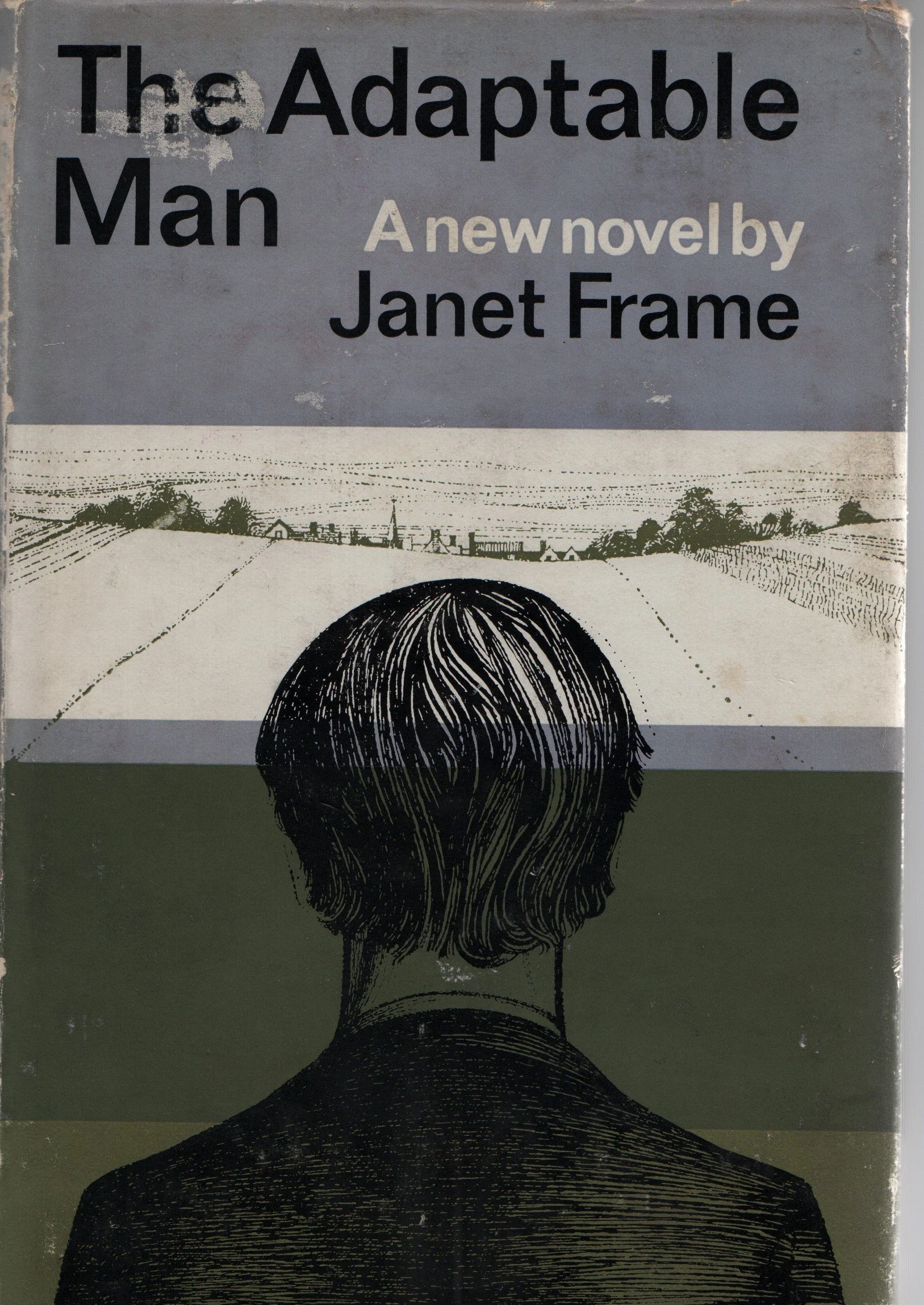
Not much changes in the English village of Little Burgelstatham, in East Suffolk. The place and the people have remained much the same since the end of the Second World War. But it’s the 1960s and change is creeping in whether the villagers like it or not. In The Adaptable Man, her fifth novel, Janet Frame (1924-2004) explores the tension between progress and stagnation, between adapting to changing times and attitudes and clinging to old, outmoded ways. Her cast of characters are unremarkable people whose lives have been disrupted by unwelcome shifts in fortune or are on the cusp of planned change. The Reverend Aisley Maude, who has recently lost his wife and is questioning his faith, has come to Little Burgelstatham after an illness to convalesce at Clematis Cottage, the home of his brother Russell and Russell’s wife Greta. Aisley, who reads Anglo Saxon poetry, is obsessed with St. Cuthbert, a 7th-century monk, and aspires to mimic the saint, who lived as a hermit in quiet contemplation. Russell and Greta have their own obsessions. Russell, a dentist who has resisted updating the equipment in his surgery, is obsessed with teeth and his stamp collection. Greta spends her time gardening and trying to exterminate the pests that are giving her trouble. Living with the Maudes as guests are their 20-year-old son Alwyn and his fiancé Jenny. Alwyn, who seems to float above the fray, fancies himself an amoral creature, a man of his times who welcomes change, untethered to the past, free to do as he pleases. The village in general is suspicious of strangers and resistant to change, especially technology (television, electricity) and the recent influx of holiday visitors from London, who are buying up property as they look to the English countryside as a refuge from the urban rat-race. With patience and remarkable specificity, Frame depicts the goings-on over several months in an assortment of households in a rural community that on its surface appears tranquil, but which a little digging reveals to be a seething hotbed of envy, resentment and fear. To make matters worse, the encroachment of the external world on Little Burgelstatham has taken unexpected and disturbingly tangible form in the body of a young Italian man, a seasonal farm worker, found dead (murdered?) at the edge of a pond on the village outskirts. The novel has a satirical tone and does not shy away from absurdity, and Frame’s lyrical, stream-of-consciousness approach to the narrative poses challenges but offers a huge aesthetic payoff to the persistent reader. Janet Frame delights in exposing the weaknesses, delusions and foibles of her characters—never in mockery, but affectionately, drawing the reader to them in sympathy. The third-person omniscient narrative meanders somewhat but always returns to the notion that change is an inevitable feature of the human condition, and when we resist it, we risk making ourselves look ridiculous. Janet Frame’s work draws inspiration from the author’s fascination with human behaviour, in all its manifestations, and The Adaptable Man is no exception. But this is the first of her novels to not dwell overtly, either exclusively or in part, on the many ways that mental illness can destabilize a person’s life (though a droll critic could argue that all of the characters in this novel are to some extent insane). The catastrophic and tragic event that closes the novel is perhaps a comment on the futility of humanity’s endeavours to assert control over its destiny. But as always with Janet Frame’s fiction, the reader is ultimately left to make of it what she will.
Ⴔ
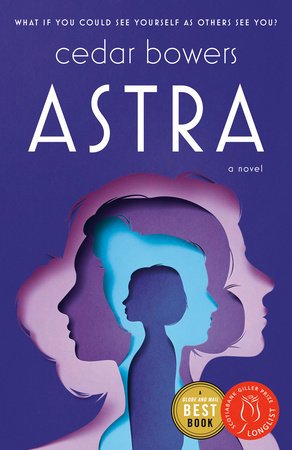
In Astra, her stunning debut novel, Cedar Bowers constructs an entire universe around a single character, described minutely, elegantly, and movingly from multiple points of view and over a period covering fifty-plus years. Though indisputably a novel, Astra at times comes across as a collection of linked stories: each section narrated from a unique perspective, and each set at a distinct period of Astra’s life as she struggles against significant obstacles to build trusting connections with the people with whom she comes into contact. Astra is born and raised in the wilds of rural British Columbia, on a commune called Celestial Farm, the visionary project of two young idealists, Doris and Raymond: Doris has supplied the financial backing, Raymond the labour. Celestial, intended as a self-sustaining community, becomes home to an everchanging gaggle of workers, drifters and hangers-on, young men and women disillusioned by modern society who are searching for meaning elsewhere. Astra’s life begins as the unwanted offspring of Raymond, a man so terrified of being bound to another person in a father-child relationship and so repulsed by what he sees as the duties and responsibilities of parenthood, that he contemplates absconding from Celestial altogether to escape them. Raymond stays on, but proves an ineffectual father, and because Astra’s mother died giving birth, she’s raised in haphazard fashion by whichever women happen to be living on the farm at any given time. Over the course of ten chapters (plus an epilogue narrated by Astra herself), Bowers depicts Astra as child, adolescent, young adult and woman in her middle years. As the story unfolds, Bowers reveals Astra as a woman who essentially shapes her own upbringing and through sheer force of will develops into an intelligent, empathetic and independent human being who is not afraid to assert herself and face the challenges of motherhood and of living in a world that rarely gives her a break. Considering that Bowers’ prose often soars to remarkable lyrical heights and that every scene is richly imagined and skillfully executed, it will come as no surprise that the result is a novel of extraordinary emotional depth that is absorbing from start to finish.